
The Sustainability Impact of Smart Homes: Look Beyond the Devices
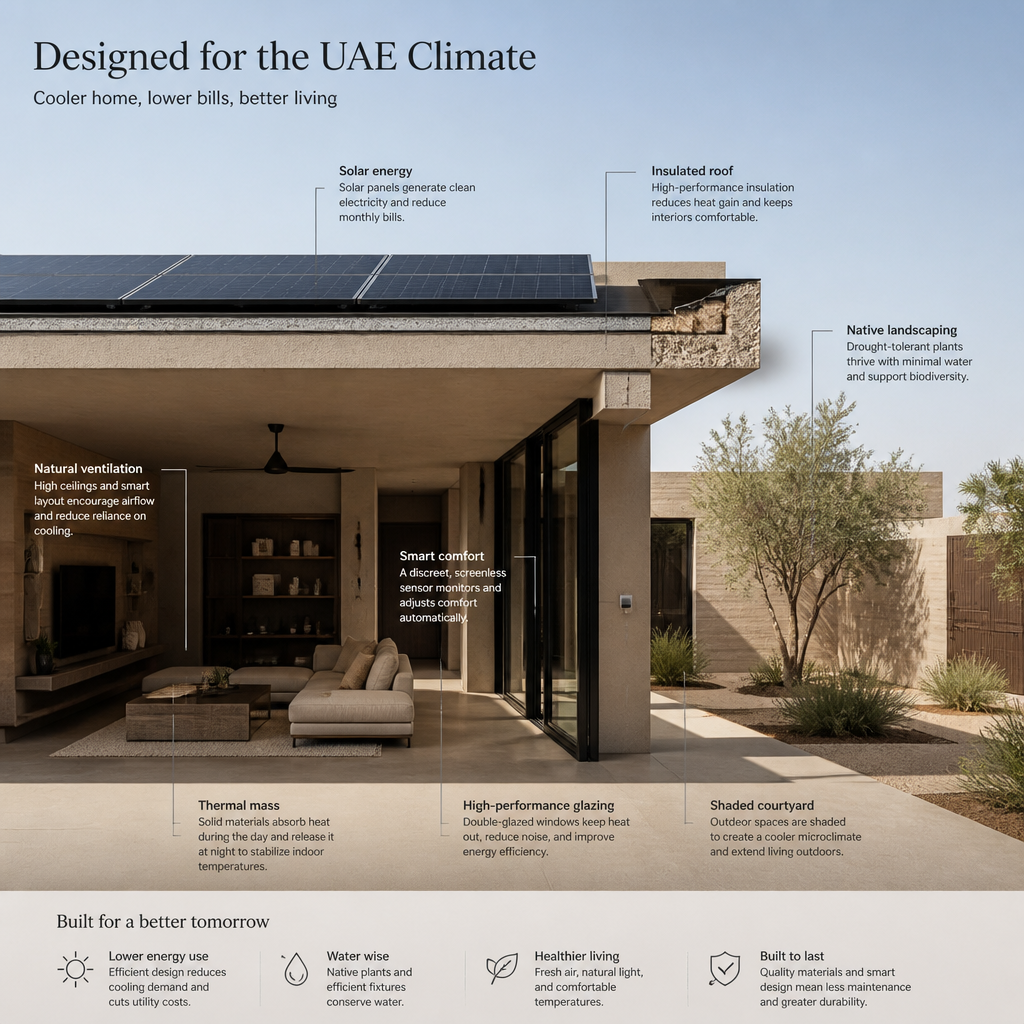
Understanding the sustainability impact of smart homes starts with a question: what waste are you trying to prevent? A connected device is not, by itself, evidence of an environmental benefit. For a UAE household, the useful starting point is a practical brief covering comfort, cooling, lighting, water, maintenance and everyday habits—not a shopping list of gadgets.
What the available evidence can—and cannot—tell you
The supplied Khaleej Times extract reports a UAE sustainability milestone involving The Switch Company.[narrative_en_sustainability-impact-of-smart] However, the extract does not provide household energy measurements, installation details or a method for attributing environmental outcomes. It is therefore not a basis for predicting what an individual home will save.
That distinction matters when reading smart-home sustainability stories. A company announcement and a measured household outcome answer different questions. Before accepting a performance claim, ask what was measured, under what conditions, and whether the finding applies to the proposed equipment and your routines.
This guide is consequently a decision framework, not a quantified assessment of UAE homes. Use it to shape questions, plan observations and identify information gaps. Where evidence is absent, leave the expected benefit unconfirmed rather than filling the gap with an attractive estimate.
Start with a household problem, not a product category
Walk through your home and describe the moments you would like to change. Perhaps cooling is left running after everyone leaves, outdoor lighting is forgotten, or a suspected leak is difficult to investigate. Treat these as observations to verify, not assumptions about how much waste they represent.
For each concern, write down the existing routine, the desired outcome and the limits that matter. A cooling brief might say: maintain comfort when rooms are occupied, avoid unnecessary operation when appropriate, and keep adjustment straightforward for everyone.
Then consider whether the answer needs a connected product at all. Include manual changes, maintenance and existing equipment settings among your options. For further planning, explore the smart-home advisor page with your household brief in hand. Keep the conversation focused on the problem rather than the appeal of a feature.
Make cooling controls accountable to comfort
If cooling is your chosen priority, begin by documenting how the household actually uses each space. Discuss sleeping preferences, working patterns, guests, pets and anyone with particular comfort needs. Avoid building the plan around an idealised routine that nobody follows.
Ask whoever is assessing the system to explain equipment compatibility, sensor placement, control boundaries and what happens during a connectivity failure. Request a clear explanation of how an automated instruction interacts with the existing controls. Do not assume that an app can safely override every setting.
Write down the intended behaviour before enabling it: what should happen when a room becomes vacant, when someone returns, and when the reading appears wrong? Preserve an accessible override. Judge the trial against both observed consumption and acceptable comfort; an uncomfortable home is not a satisfactory sustainability outcome.
Use lighting and water features with a clear purpose
For lighting, distinguish between a decorative preference and an attempt to address unnecessary use. Both can belong in a home, but they should not share an environmental label without evidence. Identify the lights involved, why they remain on and whether a schedule or manual habit addresses the issue.
If you trial occupancy-based lighting, check the experience during quiet activities, not just while walking through a room. Ask residents whether the behaviour is predictable and whether they can intervene without navigating an unfamiliar interface.
For water-related devices, define the response as carefully as the alert. Who receives a notification? Who can investigate? What should happen if that person is away? If automatic shut-off is proposed, ask a qualified professional to explain suitability, access and recovery. Treat a notification as a prompt for action, not proof of an avoided loss.
Measure the outcome without promising a result
Before changing a routine, gather the consumption information already available to you. Note occupancy, cooling preferences, unusual appliance use and relevant maintenance. Keep the same kinds of notes during the trial so that you have context when reviewing the readings.
Avoid treating a change in the bill alone as proof that the automation caused it. Check whether the comparison also involves changed weather, household activity, billing periods or charges. Where you cannot separate these influences, describe the result as an observation rather than an established saving.
Decide in advance what would justify keeping the automation. That might include a credible change in consumption, acceptable comfort and a routine residents can manage. If results are unclear, consider adjusting or pausing the trial. The sustainability assessment page can be a place to continue exploring your questions; do not treat an assessment label as a substitute for disclosed methods and evidence.
Include the device’s whole life in the decision
A sustainability brief should extend beyond what happens after installation. Ask about the proposed device’s materials, packaging, power requirements, replaceable components and eventual disposal. Request supporting information where available, and record what remains unknown.
Before replacing working equipment, ask whether it can remain in service within the proposed design. Also ask how a failed sensor, controller or power supply would be replaced. Clarify whether repair requires discarding unrelated components or changing the surrounding system.
Investigate dependence on remote services. What functions remain available if internet access is interrupted or a service is withdrawn? How are settings backed up, and who holds administrator access? These questions do not establish an environmental benefit on their own. They help you assess whether the purchase fits your intention to maintain and use the equipment responsibly.
Make the sustainable routine easy to live with
Invite everyone who uses the home to test the controls. Include residents who prefer physical switches and anyone who may need help with an app. Explain what each automation is meant to do and how to stop it when circumstances change.
Keep a simple household record of settings, maintenance responsibilities and unresolved issues. Review it after changes such as a move, a new work routine or an equipment replacement. Remove routines that no longer serve a clear purpose.
The final test is practical: can you explain the intended environmental outcome, point to relevant observations and identify the limitations? If not, describe the feature as convenience or experimentation. That is a more honest foundation for decision-making than assigning a sustainability claim to every connected device.
Approach smart-home sustainability as an ongoing household practice: identify a problem, choose an appropriate response, observe the outcome and revise when necessary. Keep comfort and responsible ownership in the brief, and reserve environmental claims for outcomes the available evidence can support.
Frequently asked questions
Does installing smart-home devices guarantee energy savings?
Do not treat savings as guaranteed. Ask for evidence relevant to your equipment and usage, then evaluate the actual outcome with the comparison’s limitations clearly recorded.
Should I replace working equipment to make my home smart?
Do not make replacement the default. Ask whether the existing equipment can support your intended routine and request a clear justification for any proposed replacement.
What should I ask before approving an installation?
Ask about compatibility, manual overrides, maintenance, administrator access, service dependence and the method for evaluating the intended outcome.
Explore next
Get a tailored Smart Citizens proposal
Tell us about your villa, apartment or project — our AI Advisor recommends the right package within minutes, or book a free site visit with our Dubai team.
Prices and recommendations may vary based on villa size, wiring, system type, and customer requirements.
Share this guide with someone planning a smart home in Dubai.