
Ajman’s green-building headline, examined
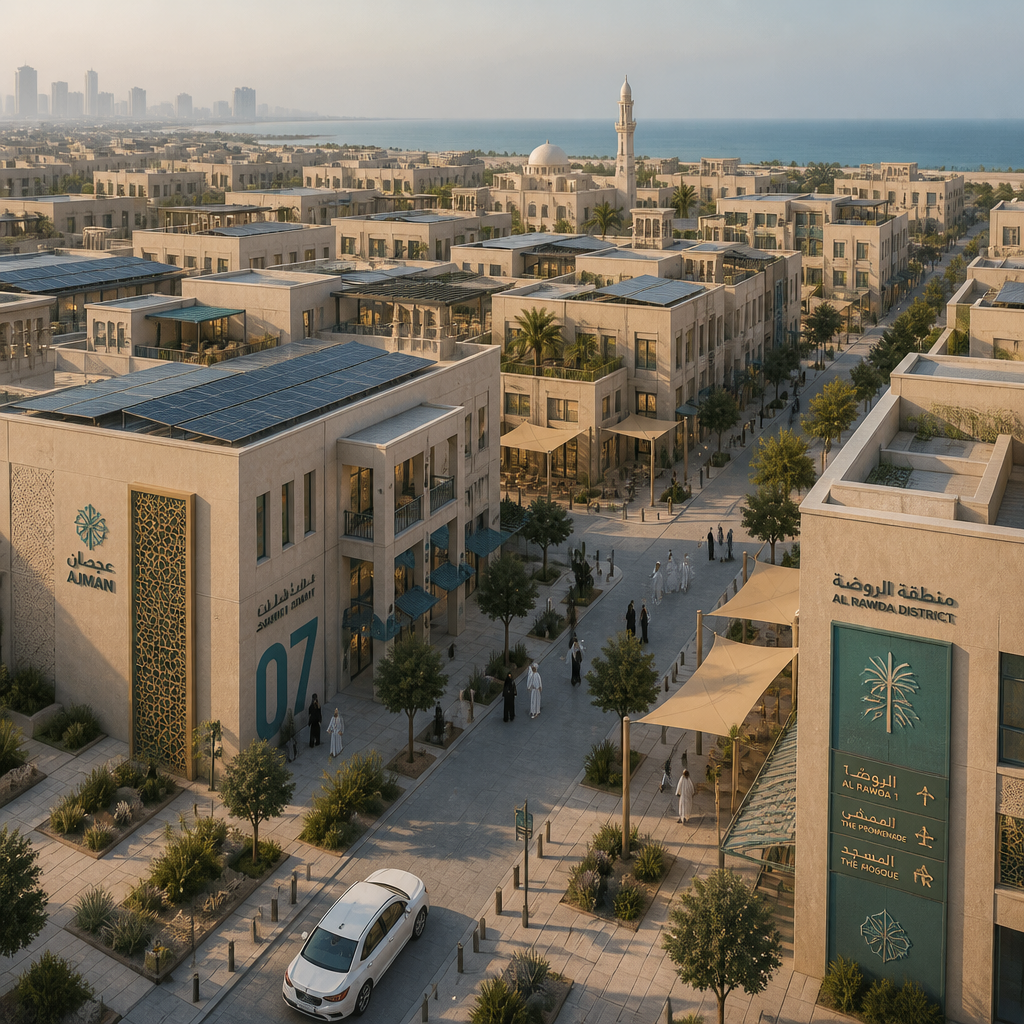
The supplied headline says Ajman doubles green buildings in two years and nears the 17,000 mark. [narrative_en_ajman-doubles-green-buildings] That is the story’s central proposition, but the available source material does not provide the underlying figures, counting method or definition of a green building. This review therefore separates the headline from what can actually be established. For residents, owners and property professionals, the useful question is not simply how large the total has become, but what inclusion in that total means—and whether there is evidence of environmental performance in occupied buildings.
What the source material establishes
The evidence supplied for this review is uneven. The Ajman reference identifies a Khaleej Times source, but it contains no article text or underlying dataset. [narrative_en_ajman-doubles-green-buildings] The growth statement is present in the editorial brief’s headline, not in an extract that can be checked against a quoted official release. That distinction matters: a reference identifies where a claim may originate, while accessible evidence allows readers to examine its meaning.
The available Gulf News extract describes Dubai Municipality launching a guide intended to make existing buildings greener, more efficient and cost-effective. [narrative_en_ajman-doubles-green-buildings] It does not supply Ajman figures or establish how Ajman classifies its buildings. It is relevant to the question of improving existing properties, but it cannot close the evidential gap in the Ajman headline.
This review consequently treats the headline as an attributed proposition and uses the remaining discussion as an assessment framework. It does not reconstruct missing totals, infer a baseline or assign environmental benefits to the reported growth. Those steps require evidence that is not included here.
Define the building before interpreting the count
The central research question is what qualifies a property for inclusion. Does the count refer to a design approval, a completed building, a documented assessment or a property whose performance has been checked after occupation? These are alternative interpretations to investigate, not descriptions of Ajman’s system. Without the actual definition, the headline cannot tell a buyer or tenant which interpretation applies.
The unit of measurement also needs clarification. Ask whether the dataset counts individual structures, developments, permits or another administrative unit. A development containing several structures raises a different counting question from a single building with several occupied units. The source should explain how those cases are handled rather than leave readers to assume.
A useful supporting table would identify the category, inclusion criteria, geographic scope and reporting cut-off. It should also distinguish active entries from withdrawn or superseded records. Until that information is available, the total is best read as a reported administrative indicator whose connection to individual property performance remains to be established.
Test the growth claim without inventing a baseline
The headline describes a doubling over a period of two years, alongside a total approaching 17,000 buildings. [narrative_en_ajman-doubles-green-buildings] Neither the exact endpoint nor the starting value is supplied in the accessible evidence. Readers should therefore avoid calculating an apparently precise baseline from the rounded headline. Such arithmetic would create a number, not recover a verified historical record.
Verification should begin with the original totals and their reporting dates. The next question is comparability: were the same boundaries, categories and inclusion rules used throughout? Request an explanation of any reclassification, retrospective registration or correction. These are checks to perform, not suggestions that such changes occurred in Ajman.
It would also be useful to separate additions during the reporting period from the cumulative total. Ask how newly completed properties are distinguished from existing properties entering the dataset. That separation would help establish what kind of growth is being described. Without it, the evidence does not justify interpreting the headline as a measure of construction activity, retrofit activity or verified operational improvement.
Keep building status separate from environmental outcomes
A careful assessment should keep eligibility, installed features and operating results in distinct parts of the evidence file. Eligibility answers why a property was counted. Feature documentation describes what was designed or installed. Operating records address what happened while the building was in use. Do not move from the first category to the last without supporting documentation.
For energy, request the reporting boundary, the consumption records and an explanation of how occupied space and operating conditions were handled. For water, ask which uses are included and whether the records cover the whole property or only selected areas. For comfort, request the assessment method rather than treating the presence of equipment as an outcome.
This approach does not dismiss green-building status. It gives that status a precise role while leaving room for separate performance questions. A responsible description might say that a property meets documented inclusion criteria, then discuss measured results only where records support them. In this review, the source material does not establish Ajman-wide energy, water or emissions outcomes, so no such results are attributed to the reported growth.
What residents and prospective buyers should ask
For a resident, the practical starting point is a building-specific document request. Ask the owner or representative what the sustainability description means, who assessed it, what part of the property it covers and which documents support it. Seek a clear distinction between planned features and completed work. Where a description is vague, request clarification before relying on it in a decision.
Questions about daily experience should remain separate. How is indoor comfort managed? Who receives maintenance requests? What information is available about shared-area consumption? Which responsibilities fall to the occupant, and which remain with building management? These questions turn a broad label into a discussion of the property the person will actually use.
Avoid assuming that inclusion in a headline total establishes affordability, low bills or a particular level of comfort. Instead, ask for relevant records and understand their limitations. Readers exploring the connection between controls and everyday use can visit smart living topics. Treat that exploration as background learning, not as evidence that any specific property has achieved a stated environmental result.
An evidence-led checklist for owners and managers
An owner responding to the story can begin by assembling an evidence folder. Include the available design documents, equipment information, commissioning records, maintenance history and consumption records. Identify missing items explicitly. The aim is not to create a persuasive sustainability narrative before the facts are known, but to understand which statements the records can support.
Next, define the question behind any proposed work. Is the concern unexplained consumption, inconsistent comfort, incomplete documentation or a maintenance issue? Ask the reviewing professional to state what needs investigation and what evidence would justify an intervention. Keep proposed measures distinct from measured outcomes, and avoid assigning savings before an appropriate assessment.
For any eventual project, request a written scope covering responsibilities, acceptance checks, operating instructions and follow-up evaluation. Decide how results will be recorded before describing the work as successful. The sustainability assessment page is a relevant internal destination for readers considering assessment questions. It should not be read here as proof of a particular service outcome, certification or guaranteed financial return.
Where the Dubai guide fits—and where it does not
The Gulf News extract presents Dubai Municipality’s guide as an initiative focused on greener, more efficient and cost-effective existing buildings. [narrative_en_ajman-doubles-green-buildings] That makes it relevant contextual reading for someone asking how an existing property might be assessed or improved. The extract, however, does not provide the guide’s detailed recommendations or any measured outcomes from its use.
It would be inappropriate to turn that brief description into a claim about mandatory work in Ajman. This review has no supplied evidence establishing the guide’s applicability there. It also cannot use the guide’s stated cost-effectiveness aim as proof that an individual project will reduce costs. An initiative’s stated purpose and a demonstrated project result are separate propositions.
The constructive link is therefore a research question: alongside counting buildings with an identified status, what information is available about the existing stock and its operation? Readers can investigate that question without assuming a shared regulatory framework. Any compliance decision should be checked against the applicable local documentation and the circumstances of the property.
What stronger public reporting would look like
A transparent release should let a reader move from the headline to the underlying records. Start with the exact total, the reporting cut-off and a concise definition of inclusion. Add the comparable earlier total and explain any changes in scope. Provide a contact point or source document for questions about classification. This is a proposed reporting framework, not a description of current practice.
Where operational results are discussed, publish the method alongside the result. Explain which properties were assessed, which period was covered and what information was unavailable. Keep observed outcomes separate from estimates or targets. Readers should be able to tell whether a statement concerns the entire counted population or only a selected group.
Plain-language explanation is equally important. A resident should not need to infer whether a label refers to design, completion or ongoing operation. Clear reporting would allow different audiences to use the same announcement appropriately: journalists could verify the trend, owners could understand the classification, and residents could identify the documents relevant to their own property.
How to read the headline responsibly
The appropriate conclusion is conditional rather than dismissive. If the underlying records confirm the headline on a consistent basis, the story would document growth in the category being counted. The environmental meaning of that growth would still depend on the category’s definition and any accompanying performance evidence. Verification and interpretation should remain separate tasks.
Until those records are available, share the growth statement with attribution and preserve its uncertainty. Do not convert it into a claim about citywide resource use, universal compliance, property values or household bills. None of those conclusions is established by the material supplied for this review.
For practical decisions, return to the building rather than the headline. Request the relevant documentation, ask precise questions about operation, and distinguish intentions from results. That approach allows the story to encourage useful scrutiny without overstating what the evidence shows. It also provides a clear path for updating the analysis when the original data and classification rules become available.
Ajman’s headline deserves examination, not embellishment. The next step is to obtain the original totals, confirm what is being counted and distinguish classification from measured performance. For residents and owners, building-specific evidence remains the appropriate basis for decisions about sustainability, comfort and improvement work.
Frequently asked questions
What does “green building” mean in this Ajman headline?
The supplied material does not define the term. Request the inclusion criteria and clarify whether the classification concerns design, completion, assessment or operating performance.
Does the headline demonstrate lower utility bills?
No bill reduction is established by the supplied evidence. A property-specific assessment would need relevant consumption records, billing information and a clearly defined comparison.
Does Dubai’s existing-building guide establish requirements in Ajman?
The available extract describes a Dubai Municipality guide for greener, more efficient and cost-effective existing buildings. [narrative_en_ajman-doubles-green-buildings] It does not establish any requirement or applicability in Ajman.
Explore next
Get a tailored Smart Citizens proposal
Tell us about your villa, apartment or project — our AI Advisor recommends the right package within minutes, or book a free site visit with our Dubai team.
Prices and recommendations may vary based on villa size, wiring, system type, and customer requirements.
Share this guide with someone planning a smart home in Dubai.